

Cart
0
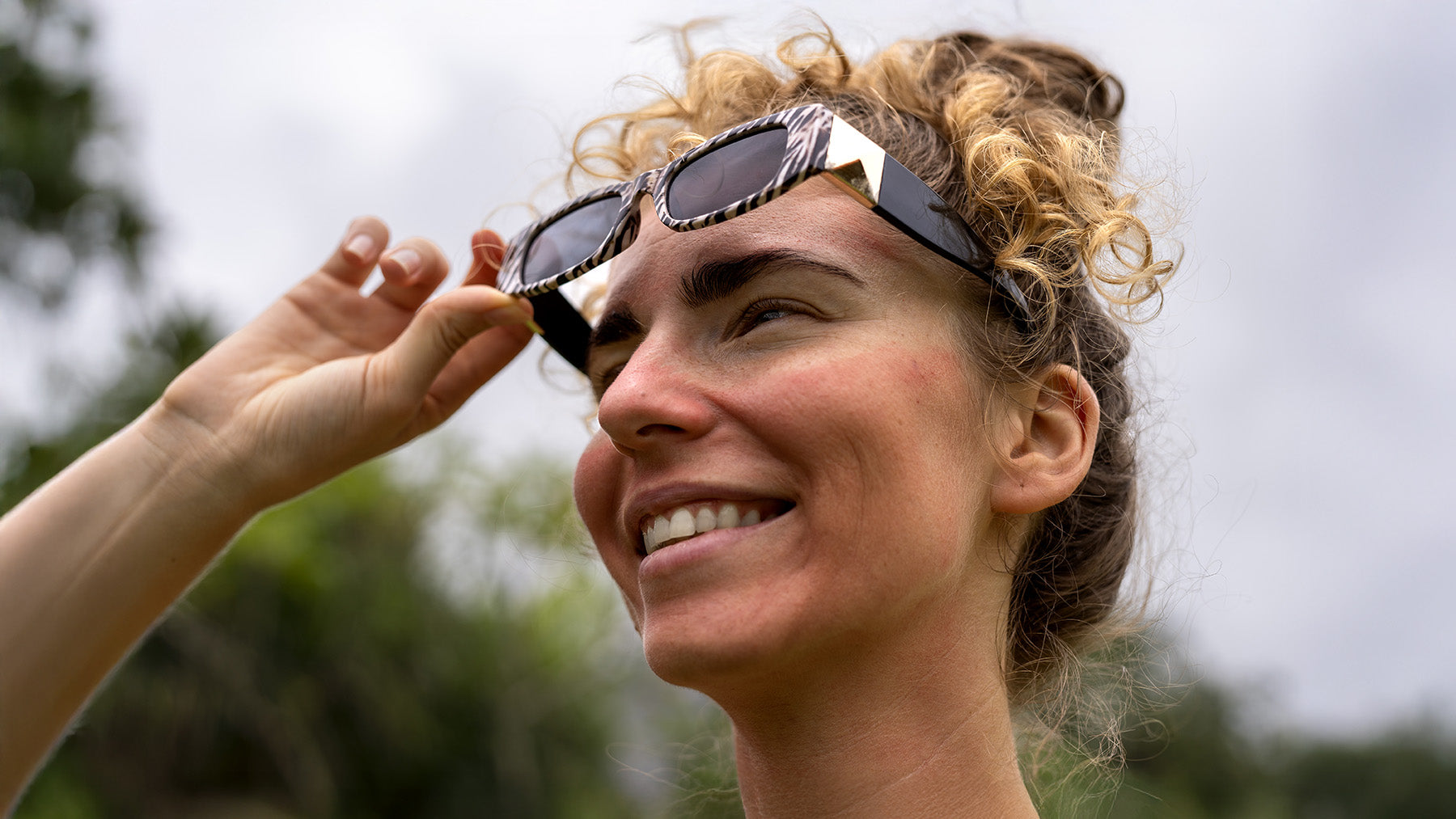
Sun damage doesn't always show up right away — it accumulates quietly over months and years before becoming visible. Here's how UV exposure affects your skin at a deeper level, and what a real repair routine looks like.
There's a version of sun damage most people recognize — the red, painful burn that shows up after a long day at the beach. But that's actually just the most visible and immediate form. The kind of sun damage that has the biggest long-term impact on your skin is the kind you can't see happening in real time.
Every day of unprotected UV exposure — whether you burn or not — causes cumulative damage at the cellular level. That damage doesn't disappear on its own. It builds up over months and years, and eventually it shows up on your skin as dark spots, uneven tone, fine lines, loss of firmness, and a dull, tired complexion that doesn't respond to moisturizer the way it used to.
The encouraging part? A lot of that damage is reversible — especially when you know which ingredients actually work and how to use them consistently.
What UV Exposure Actually Does to Your Skin
To repair sun damage effectively, it helps to understand exactly what you're dealing with.
UVB rays cause the surface-level damage — sunburn, redness, and peeling. They damage the DNA in skin cells directly, which is why chronic UVB exposure is the primary driver of skin cancer risk.
UVA rays are the more insidious of the two. They penetrate much deeper into the skin, reaching the dermis where collagen and elastin live. UVA rays break down those structural proteins over time, leading to the sagging, wrinkling, and loss of elasticity that we associate with premature aging. They also penetrate glass — which means indoor exposure through windows contributes to cumulative damage even when you never set foot outside.
Both types of UV radiation trigger melanin overproduction as a protective response. In the short term, this shows up as a tan. Over time, particularly with repeated exposure, it manifests as dark spots, uneven skin tone, and hyperpigmentation that can be difficult to fade without the right approach.
Free radical damage is another key mechanism. UV radiation generates unstable molecules called free radicals that attack healthy skin cells, degrade collagen, and accelerate the aging process at a cellular level. This is why antioxidant protection is so important — not just after sun exposure, but as a daily preventative measure.
How Sun Damage Shows Up on Different Skin Tones
Sun damage looks different depending on your complexion, and this distinction matters for how you treat it.
On lighter skin tones, sun damage tends to show up primarily as fine lines, wrinkles, visible redness, and discrete sunspots — often concentrated on the cheeks, nose, and forehead.
On medium to deeper skin tones, the picture is different. Melanated skin is less prone to visible burning, but it responds to UV-induced inflammation with stronger melanin production — meaning dark spots, post-inflammatory hyperpigmentation, and uneven skin tone are the dominant concerns. These can be more stubborn to fade than the surface-level damage seen in lighter skin, and they're often made significantly worse by sun exposure without proper protection.
Regardless of skin tone, the underlying cellular damage — collagen breakdown, DNA stress, barrier disruption — is happening in everyone.
Building a Routine That Actually Repairs Sun Damage
Repairing sun damage takes consistency over a period of weeks and months — not a single product or overnight fix. Here's how to structure a routine that addresses it from multiple angles simultaneously.
Morning:
Start with the Silkify Cleanser to gently prep your skin without disrupting the barrier, which is already compromised from UV exposure.
Follow immediately with the Renewify Serum. This is the most important morning step for sun-damaged skin. Its combination of 18% Vitamin C, Vitamin E, and Ferulic Acid does three things simultaneously — it neutralizes the free radicals that UV exposure generates, it actively inhibits the melanin overproduction that causes dark spots, and it stimulates collagen synthesis to begin reversing the structural damage that accumulates over time. Applied every morning, it works both preventatively against new damage and correctively against existing discoloration.
Apply the Hydrify Moisturizer next to restore the moisture and barrier function that UV exposure depletes. Its Green Tea Extract provides additional antioxidant support, while Lupinus Albus Seed Extract helps stimulate collagen production — complementing the work the Vitamin C serum is doing.
Finish every morning with the Shieldify Sunscreen SPF 50. This step is non-negotiable when repairing sun damage — without it, any repair work done overnight gets partially undone by the next day's UV exposure. Shieldify's mineral formula with Zinc Oxide and Titanium Dioxide provides true broad-spectrum protection without a white cast, making it suitable for all skin tones.
Evening:
Cleanse with the Exfolify Cleanser a few nights a week. Its Glycolic Acid content accelerates cell turnover — helping push sun-damaged, pigmented surface cells off the skin faster and allowing healthier cells to come through. This is one of the most effective ways to improve dull, uneven texture caused by cumulative sun exposure.
Follow with the Brightify Cream as your primary evening treatment. Formulated with Kojic Acid, Alpha-Arbutin, Licorice Root Extract, and Retinyl Palmitate, it targets sun-induced hyperpigmentation through multiple pathways — inhibiting melanin production, accelerating the shedding of pigmented cells, and stimulating the collagen renewal that reverses UV-induced structural damage. Nighttime application is ideal because skin is in active repair mode while you sleep, and Retinyl Palmitate can increase photosensitivity.
On evenings when you use the Silkify Cleanser instead of the Exfolify, add the Soothify Serum before the Brightify Cream for an extra layer of hydration and anti-inflammatory support.
Two to three evenings per week, incorporate the Glow Pads in place of your cleanser step. Their multi-acid formula — including Glycolic, Lactic, Mandelic, and Azelaic Acid — provides a deeper level of resurfacing that significantly accelerates the fading of sun spots and the improvement of overall skin texture. Always follow the next morning with SPF.
How Long Does It Take to See Results?
This is the question everyone wants answered — and the honest answer is that it depends on the depth and duration of the damage.
Surface-level discoloration and dullness typically responds within 2 to 4 weeks of a consistent routine. More established dark spots and uneven tone usually require 6 to 12 weeks of daily use to show significant improvement. Deeper structural changes — fine lines, loss of firmness — take longer and require sustained use of collagen-stimulating ingredients over several months.
The key variable in all of this is consistency. The most effective routine in the world won't work if it's applied sporadically.
What to Avoid When Repairing Sun-Damaged Skin
- Skipping SPF — the single biggest mistake when trying to fade sun damage. UV exposure undoes brightening work faster than any serum can repair it.
- Over-exfoliating — more isn't better. Too much exfoliation compromises the barrier and can worsen sensitivity and pigmentation, especially in melanated skin.
- Layering too many actives at once — particularly retinoids and high-concentration acids on the same night. Build slowly and let your skin adjust.
- Expecting overnight results — sun damage accumulated over years takes weeks and months to meaningfully reverse. Patience and consistency are the most important factors.
The Bottom Line
Sun damage is one of the most common and most treatable skin concerns — but it requires a strategic, consistent approach rather than a reactive one. The right combination of antioxidant protection in the morning, targeted brightening and cell renewal at night, and non-negotiable daily SPF gives your skin everything it needs to repair existing damage and prevent new damage from accumulating.
The sooner you start, the more you can reverse. And the best time to start is now.
Ready to Restore Your Skin?
Ready to start repairing sun damage and restoring your skin's natural glow? Explore Audaja's full collection of dermatologist-tested, science-backed skincare at audaja.com — or take the free Skin Quiz to get a personalized repair routine built for your skin.

